In industrial piping systems, choosing the right type of fitting is crucial for ensuring safety, efficiency, and long-term reliability. Two of the most common types are butt welded fittings and socket welded fittings. While both are used to connect pipes permanently, their construction, performance, and application vary significantly.
As a manufacturer and global supplier of stainless steel pipes and fittings, GxpipeTech has extensive experience serving EPC contractors, fabricators, and distributors worldwide. Let's take a closer look at how these two fitting types compare — and when you should choose one over the other.
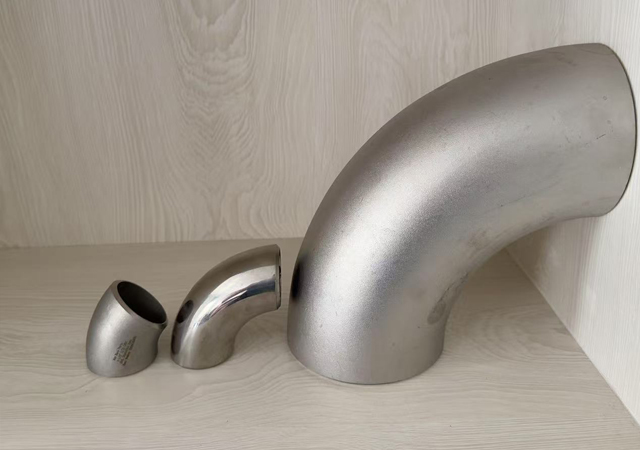
1. The Core Difference Explained
The fundamental difference between butt welded fittings and socket welded fittings lies in how the pipe and fitting are joined.
Butt Welded Fittings are welded directly to the pipe end, with the ends beveled and joined together using a full-penetration weld. This creates a smooth, continuous inner surface.
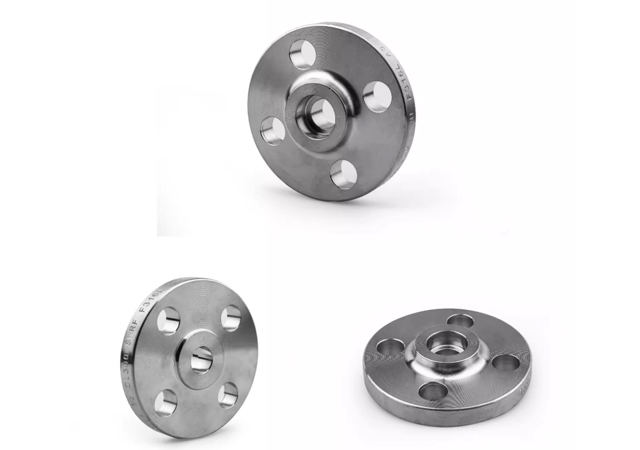
Socket Welded Fittings have a recessed socket, into which the pipe is inserted and then fillet welded around the outer edge.
In short:
Butt welded fittings are preferred for larger, high-pressure pipelines, while
Socket welded fittings are typically used for smaller diameters and lower-pressure systems.
2. What Are Butt Welded Fittings?
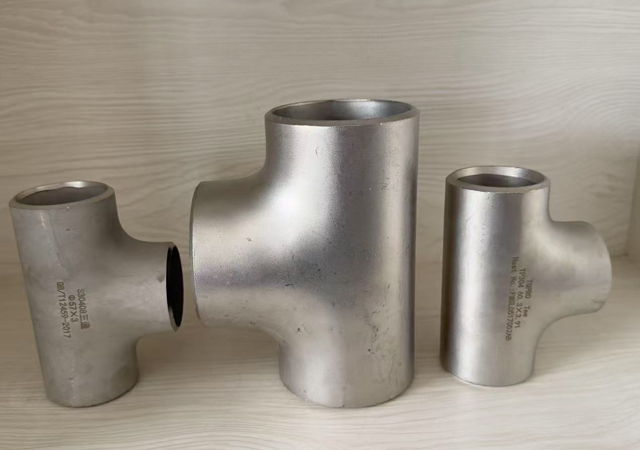
Butt welded fittings are made from seamless or welded pipe material and are designed to form a permanent, high-strength connection with the piping system. They include elbows, tees, reducers, and caps that are welded along the full circumference of the pipe.
Key Advantages
Smooth internal surface: No sudden restrictions or turbulence, allowing for optimal fluid flow.
High mechanical strength: The continuous metal structure after welding ensures strong pressure and temperature resistance.
Durability: Ideal for systems requiring minimal maintenance and long service life.
Better corrosion resistance: The absence of crevices at the joint minimizes corrosion risks.
Suitable for large diameters: Commonly used for pipes above 2 inches in diameter.
Applications
Power plants (steam and condensate systems)
Petrochemical refineries and offshore platforms
High-pressure pipelines for oil and gas transportation
Process piping in chemical and pharmaceutical plants
Because of these properties, butt welded fittings are the standard choice in critical and high-integrity systems where weld quality, pressure containment, and efficiency matter most.
3. What Are Socket Welded Fittings?
Socket welded fittings are forged fittings designed for small-bore piping systems, usually below 2 inches (DN50). They are easier to install because the pipe simply fits into the socket end of the fitting and is welded externally.
Key Advantages
Ease of installation: Requires less alignment precision compared to butt welds.
High leakage resistance: The socket design helps ensure tightness at moderate pressures.
Compact design: Ideal for limited space or small pipe runs.
Limitations
The small gap between the pipe end and the socket bottom can trap fluids, leading to corrosion or crevice cracking in certain media.
Not suitable for corrosive or high-temperature environments where cleanliness and weld quality are critical.
Not used for large pipe diameters or high-pressure service.
Applications
Hydraulic and compressed air systems
Firefighting lines and water distribution systems
Industrial service lines in non-corrosive environments
4. Technical Comparison: Butt Welded vs Socket Welded Fittings
| Feature | Butt Welded Fittings | Socket Welded Fittings |
Connection Type | Full penetration butt weld | Fillet weld at pipe outside |
Pipe Size Range | Typically > 2" (DN50 and above) | Typically ≤ 2" (DN50 and below) |
Pressure Rating | High pressure and high temperature | Medium to low pressure |
Flow Efficiency | Excellent – smooth bore | Moderate – potential turbulence at weld |
Corrosion Resistance | High | Moderate (risk of crevice corrosion) |
Maintenance | Low | Moderate |
Installation Complexity | Higher – requires skilled welders | Easier and faster |
Applications | Process, power, oil & gas, petrochemical | Utility, fire protection, low-pressure systems |
5. Welding and Inspection Considerations
For Butt Welded Fittings
Welding Process: Requires precise alignment, beveling, and skilled welders.
Inspection: Typically involves radiographic (RT) or ultrasonic testing (UT) to ensure weld penetration and detect internal defects.
Finish: The inner surface can be polished to meet sanitary or high-purity standards (especially in stainless steel systems).
For Socket Welded Fittings
Welding Process: Simpler, but risk of weld defects like lack of fusion if the pipe is not properly seated.
Inspection: Usually limited to visual and surface testing (MT or PT).
Limitations: The expansion gap in the socket may cause stress during thermal cycling, reducing service life in high-temperature lines.
6. Cost and Long-Term Value
While socket welded fittings may appear cheaper initially due to easier installation, butt welded fittings offer better long-term value in industrial operations.
Their superior strength, leak-proof performance, and lower maintenance costs make them more economical over a project's lifespan, especially in continuous service conditions.
In industries such as oil and gas or power generation, downtime from a joint failure can cost far more than the initial savings from using socket welded fittings.
7. Material Options and Standards
Both fitting types are available in a range of materials and manufactured under international standards.
Common Materials
Carbon Steel (ASTM A234 WPB)
Alloy Steel (ASTM A234 WP11/WP22)
Stainless Steel (ASTM A403 WP304/316/321)
Standards
Butt Welded Fittings: ASME B16.9, MSS-SP-75, EN 10253
Socket Welded Fittings: ASME B16.11, MSS-SP-79
At GxpipeTech, our butt welded fittings and forged socket welded fittings are manufactured in compliance with ASME, ASTM, and ISO standards — with full traceability, non-destructive testing, and material certification provided for each batch.
8. Which Should You Choose?
| Use Case | Recommended Fitting Type |
High-pressure pipelines | Butt welded fittings |
Large-diameter pipes | Butt welded fittings |
Small-bore utility lines | Socket welded fittings |
Corrosive or sanitary environments | Butt welded fittings |
Systems requiring easy field assembly | Socket welded fittings |
In summary:
Choose butt welded fittings for strength, reliability, and long-term performance.
Choose socket welded fittings for smaller systems where simplicity and speed are more important than maximum strength.
9. Why Partner with GxpipeTech
At GxpipeTech, we specialize in producing high-quality stainless steel butt welded fittings and forged socket welded fittings for demanding industrial applications.
Our advantages include:
Precision manufacturing using seamless pipe material
Advanced heat treatment and dimensional control
100% inspection with hydrostatic and ultrasonic testing
Global logistics and flexible MOQ for distributors and project contractors
Whether your project requires high-pressure stainless steel piping or customized fitting configurations, our technical sales team ensures you get the right product with the right certification — every time.
Conclusion
The difference between butt welded and socket welded fittings goes beyond installation — it's about performance, durability, and suitability for your operating conditions.
For high-integrity, long-life piping systems, butt welded fittings remain the industry standard due to their superior strength and corrosion resistance. Meanwhile, socket welded fittings offer a practical solution for smaller, lower-pressure applications.
When performance, safety, and reliability matter, GxpipeTech delivers the quality and technical expertise that global buyers trust.
FJGX
Leading Manufacturer of Stainless Steel Piping Solutions.