Duplex stainless steel pipes provide higher strength and superior resistance to stress corrosion cracking, while austenitic stainless steel pipes offer excellent formability and broad corrosion resistance for general service. The right choice depends on pressure, temperature, corrosion environment, and lifecycle cost—not just material familiarity. For projects requiring strength and corrosion performance in demanding environments, working with a qualified duplex stainless steel pipe factory often delivers clear technical and economic advantages.
What is the main difference between duplex and austenitic stainless steel pipes?
The fundamental difference lies in microstructure and mechanical behavior.
Duplex stainless steel has a mixed ferritic–austenitic structure, typically around 50/50.
Austenitic stainless steel has a fully austenitic structure.
This structural difference leads to higher yield strength and better resistance to certain corrosion mechanisms in duplex stainless steel pipes, while austenitic grades prioritize ductility and ease of fabrication.
How does strength compare between duplex and austenitic pipes?
Duplex stainless steel pipes generally have approximately twice the yield strength of common austenitic grades such as 304 or 316.
This higher strength allows:
Reduced wall thickness for the same pressure rating
Lower overall material weight
Improved resistance to deformation under load
For high-pressure piping systems, sourcing from an experienced duplex stainless steel pipe factory can result in both structural and cost efficiencies.
Which material offers better corrosion resistance?
Corrosion performance depends on the environment.
Duplex stainless steel pipes
Excellent resistance to chloride-induced stress corrosion cracking
Higher pitting and crevice corrosion resistance (higher PREN values)
Preferred for marine, offshore, and desalination applications
Austenitic stainless steel pipes
Very good general corrosion resistance
Strong performance in mildly corrosive environments
Widely used in chemical processing and food-grade systems
In chloride-rich or aggressive environments, duplex stainless steel often outperforms austenitic alternatives.
How do temperature limits differ?
Temperature capability is a key selection factor.
Austenitic stainless steel performs well at both low and high temperatures, including cryogenic service.
Duplex stainless steel is typically limited to moderate temperature ranges and is not recommended for very high-temperature or cryogenic applications.
For systems operating outside the optimal temperature range of duplex, austenitic grades remain the safer choice.
Which is easier to fabricate and weld?
Austenitic stainless steel pipes are generally easier to weld and form.
Wider welding procedure tolerances
Less sensitivity to heat input
Simpler fabrication for complex geometries
Duplex stainless steel pipes require controlled welding procedures to maintain proper phase balance. A capable duplex stainless steel pipe factory will implement qualified welding procedures and post-weld controls to ensure consistent performance.
How do standards and specifications differ?
Both material families are governed by well-established standards.
Duplex stainless steel pipes: ASTM A790, ASTM A928, EN 10216-5
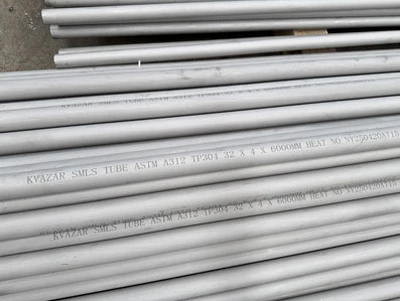
Austenitic stainless steel pipes: ASTM A312, ASTM A358, EN 10216-5
Pressure design is typically governed by ASME B31 piping codes, regardless of material type. Correct alignment between material standards and design codes is essential for inspection approval.
Is duplex stainless steel more expensive than austenitic?
Initial material cost per ton is often higher for duplex stainless steel, but total installed cost can be lower.
Reasons include:
For projects focused on lifecycle cost rather than purchase price alone, duplex stainless steel pipes can offer a compelling value proposition.
When should austenitic stainless steel pipes be selected?
Austenitic stainless steel pipes remain the preferred choice when:
Extreme temperatures are involved
High formability is required
Corrosion conditions are moderate
Fabrication simplicity is critical
They are widely used in chemical plants, food processing, pharmaceuticals, and general industrial piping.
When is duplex stainless steel the better option?
Duplex stainless steel pipes are the better choice when:
High pressure and mechanical strength are required
Chloride stress corrosion cracking is a concern
Weight reduction is beneficial
Long-term reliability in aggressive environments is critical
In such cases, partnering with a reliable duplex stainless steel pipe factory ensures material quality, correct heat treatment, and compliance with applicable standards.
Duplex vs Austenitic Stainless Steel Pipe – Technical Comparison
| Aspect | Duplex Stainless Steel Pipe | Austenitic Stainless Steel Pipe |
Microstructure | Mixed ferritic–austenitic | Fully austenitic |
Typical Grades | 2205 (UNS S32205), 2507 | 304 / 304L, 316 / 316L |
Yield Strength | Approximately 2× higher than austenitic | Lower yield strength |
Pressure Capability | Higher for the same wall thickness | Requires thicker wall for same pressure |
Corrosion Resistance | Excellent resistance to chloride SCC | Good general corrosion resistance |
Pitting Resistance (PREN) | Higher | Lower |
Temperature Range | Moderate temperature service | Wide range, including cryogenic |
Weldability | Requires controlled procedures | Easier to weld and fabricate |
Wall Thickness Optimization | Thinner walls possible | Thicker walls often required |
Weight Efficiency | Lighter for equivalent pressure | Heavier for equivalent pressure |
Cost Consideration | Higher material cost, lower lifecycle cost | Lower material cost |
Typical Applications | Offshore, desalination, oil & gas | Chemical, food, pharmaceutical |
Factory Requirements | Specialized duplex stainless steel pipe factory | Standard stainless steel pipe mills |
Making the right selection improves system performance
Duplex and austenitic stainless steel pipes are not interchangeable solutions—they are engineered for different operating conditions.
Selecting the correct material from the outset reduces maintenance risk, improves safety margins, and optimizes long-term operating costs in industrial piping systems.
FJGX
Leading Manufacturer of Stainless Steel Piping Solutions.