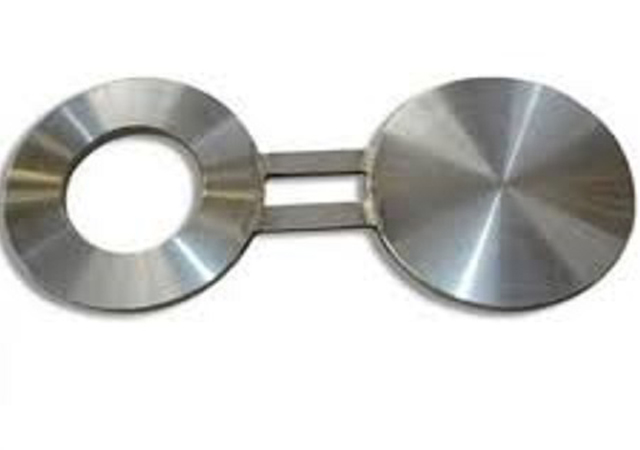
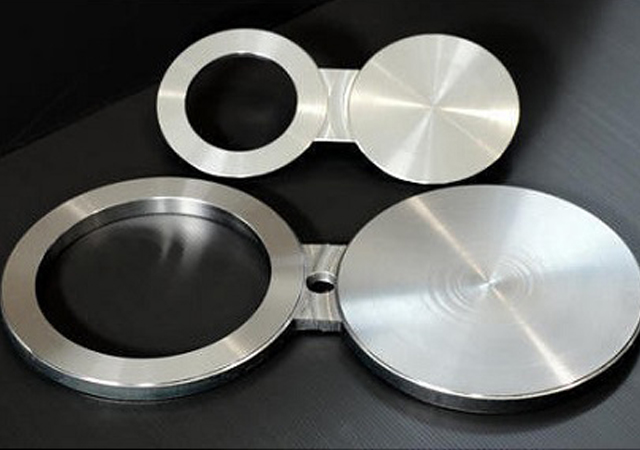
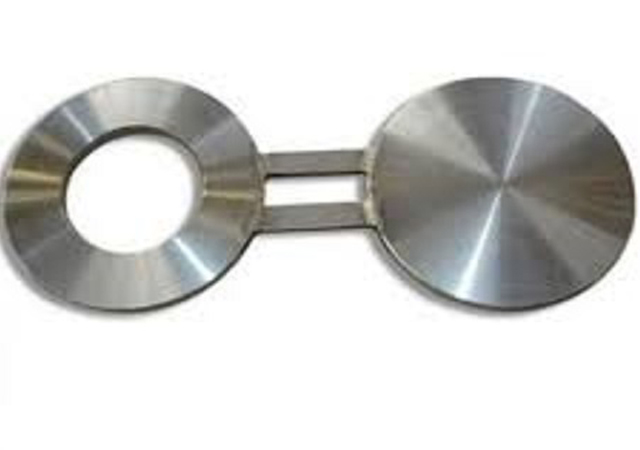
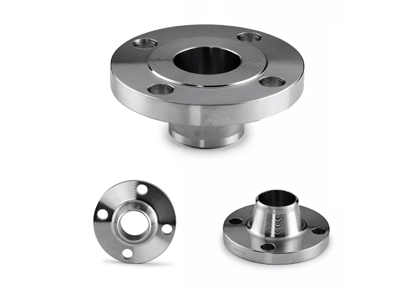
A spectacle blind flange, also known as a figure-8 blind flange, is a line isolation device used in piping systems to safely stop or allow flow. It consists of a solid blind section and an open spacer section connected by a metal web, forming a shape similar to a pair of spectacles. By rotating the spectacle blind between flanges, operators can quickly switch between open and closed pipeline conditions without removing the component.
Sizes: 1” to 24”
Pressure classes: 150# to 1500#.
Made to ASME B16.48, API 590.
Materials include A516 Gr.70, A105, stainless steel. Installed between flanges.
Spectacle blind, spade (also called a line blind or blank), and paddle blind are all pipeline isolation devices used in piping systems to ensure safe maintenance and shutdown operations. However, they differ in structure, operation, and application.
A spectacle blind consists of a figure-8 shaped plate combining one solid end and one open ring, allowing quick rotation between open and closed positions. A spade (or spade and spacer) is a removable plate inserted between flanges to completely block flow, typically requiring manual installation and removal. A paddle blind (also known as a line blind) is a single solid plate used for full isolation and must be physically inserted or removed when switching pipeline status.
In a spectacle blind vs spade vs paddle blind comparison, spectacle blinds are preferred for systems requiring frequent switching and visual status confirmation, while spades and paddle blinds are more suitable for long-term isolation or systems where simplicity and tight sealing are prioritized.
| Feature | Spectacle Blind | Spade (Spade & Spacer) | Paddle Blind |
|---|
| Structure | Figure-8 shaped plate combining blind + open section | Separate plate inserted between flanges (spade or spacer) | Single solid plate inserted between flanges |
| Operation | Rotated to switch between open and closed states | Manually inserted or removed for isolation | Inserted/removed for full isolation |
| Flow Condition | Open or closed by rotation | Fully open or fully blocked depending on insertion | Fully blocked when installed |
| Installation Speed | Fast (no removal required) | Slower (requires handling parts) | Slower (requires full insertion/removal) |
| Safety Visibility | High (clear open/closed indication) | Moderate | Low (no visual status indication) |
| Space Requirement | Medium (requires rotation space) | Flexible (good for tight spaces) | Flexible |
| Maintenance Efficiency | High | Medium | Low |
| Best Use Case | Frequent switching between operation and isolation | Systems with space constraints and manual isolation needs | Long-term or permanent pipeline isolation |