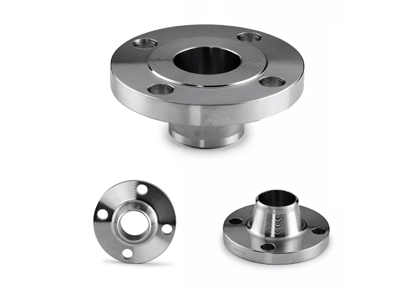
Integral flanges are typically specified under ASME, API, or EN standards, depending on the pressure class, application environment, and regional compliance requirements. In practice, ASME standards dominate general industrial and piping systems, API standards apply to high-pressure and oil & gas service, and EN standards are widely used in European projects and EPC-driven specifications. Selecting the correct standard directly affects pressure ratings, dimensional compatibility, inspection scope, and long-term system reliability.
Understanding how these standards apply to an integral flange is essential for engineers, procurement teams, and project managers involved in custom piping systems.
Integral flanges are not always listed as a standalone product category in standards, but their dimensions, pressure ratings, materials, and testing requirements are governed by established flange and pressure equipment standards.
The most commonly referenced standards include:
ASME B16 series (especially B16.5 and B16.47)
API standards such as API 6A for high-pressure service
EN standards such as EN 1092-1 for European flange systems
Each standard serves different operating conditions and industries.
ASME B16.5 is the most frequently applied standard when specifying an integral flange for industrial piping systems.
It defines:
Nominal pipe sizes (½" to 24")
Pressure classes (150 to 2500)
Dimensional tolerances
Facing types
Material groupings
Although ASME B16.5 does not explicitly label products as "integral flanges," integral flange designs are commonly machined or forged to comply with B16.5 dimensional and pressure requirements, particularly when welded directly to pipes or pressure components.
Typical applications
Petrochemical piping
Power plants
General industrial pipelines
Custom fabricated piping assemblies
For integral flanges exceeding 24 inches, ASME B16.47 may be referenced for dimensional guidance. While integral flanges are often custom-made, alignment with B16.47 dimensions ensures compatibility with standard mating flanges.
ASME standards are favored because they:
Are globally recognized
Provide clear pressure–temperature ratings
Simplify compatibility with standard valves and fittings
Are widely accepted by EPC contractors and inspectors
For many projects, specifying an integral flange manufactured in accordance with ASME B16.5 reduces technical and commercial risk.
API 6A is commonly applied when integral flanges are used in high-pressure, high-integrity oil and gas systems, such as:
Wellhead equipment
Christmas trees
High-pressure flowlines
HPHT applications
API 6A governs:
Pressure ratings beyond typical ASME classes
Material traceability
Enhanced testing and inspection
Product-level certification requirements
An integral flange built to API 6A requirements typically undergoes stricter quality control than standard industrial flanges.
API standards are preferred when:
Operating pressures exceed conventional ASME limits
Sour service or H₂S resistance is required
The project is governed by upstream oil & gas specifications
Full material traceability and certification are mandatory
In these cases, an integral flange designed under API rules provides higher confidence in structural integrity and sealing performance.
EN 1092-1 is the primary European standard for steel flanges, covering:
PN pressure ratings (PN6 to PN400)
Metric dimensions
Material designations under EN systems
Integral flanges supplied for European projects are often custom machined to match EN 1092-1 flange dimensions, ensuring compatibility with valves, fittings, and piping supplied by EU-based manufacturers.
| Aspect | ASME | EN |
Pressure system | Class (150, 300, etc.) | PN rating |
Units | Inch-based | Metric |
Material system | ASTM / ASME | EN material grades |
Typical markets | Global / Americas / Middle East | Europe |
Understanding these differences is critical when an integral flange must interface with mixed-standard systems.
| Aspect | ASME Standards | API Standards | EN Standards |
Typical Use | General industrial and process piping | Oil & gas, high-pressure, critical service | European industrial and EPC projects |
Common Flange Standards | ASME B16.5, ASME B16.47 | API 6A | EN 1092-1 |
Pressure Rating System | Class 150 / 300 / 600 / 900 / 1500 / 2500 | Pressure levels defined by API classes and design | PN ratings (PN6–PN400) |
Size System | Inch-based (NPS) | Inch-based | Metric (DN) |
Flange Face Types | Raised Face (default), Flat Face, RTJ | Primarily Flange RTJ | Flat Face and Raised Face |
Typical Applications | Refineries, chemical plants, power generation | Wellheads, flowlines, HPHT systems | Utilities, pipelines, European process plants |
Material System | ASTM / ASME materials (A105, A182, etc.) | ASTM with enhanced API requirements | EN material grades (EN 10222, EN 10028) |
Pressure & Temperature Limits | Defined by ASME pressure–temperature tables | Higher pressure capability for critical service | Defined by PN rating and material |
Gasket Compatibility | Spiral wound, ring, full-face | Metal ring gaskets (R, RX, BX) | Full-face or ring gaskets depending on PN |
Inspection Requirements | Standard industrial inspection | Enhanced testing, traceability, certification | EN conformity and inspection rules |
Typical Flange Selection | RF for most systems; FF for equipment | RTJ for high-pressure sealing | FF commonly used in many PN systems |
Material requirements are closely tied to the governing standard.
ASME-based integral flanges commonly use ASTM A105, A182 F316, or alloy steels
API-based designs may require enhanced impact testing, sour service compliance, or special alloy grades
EN-based projects specify materials according to EN 10222 or similar standards
In all cases, material certification and traceability must align with the referenced standard, particularly for pressure-retaining components.
Integral flanges are often custom-manufactured rather than mass-produced, even when built to ASME, API, or EN requirements.
Standards typically define:
Dimensional envelopes
Pressure ratings
Material groups
Inspection criteria
However, the final geometry of an integral flange is usually engineered to match a specific system, especially when welded directly to pipes, vessels, or manifolds.
This makes standard compliance even more important, as it ensures the custom component integrates safely into standardized piping systems.
When preparing a technical specification or RFQ, the following should be clearly stated:
Applicable standard (ASME, API, or EN)
Pressure class or PN rating
Design temperature
Material grade and heat treatment
Testing and inspection requirements
Dimensional compatibility with mating components
Clear standard selection reduces engineering revisions, manufacturing delays, and inspection disputes.
Selecting the appropriate standard for an integral flange is not just a documentation step—it directly impacts safety, compatibility, and lifecycle cost.
ASME standards suit most industrial and process piping
API standards are essential for high-pressure oil & gas systems
EN standards ensure compliance with European projects and regulations
For engineered piping systems, aligning the integral flange design with the correct standard ensures reliability from fabrication through long-term operation.
 Application Fields of Stainless Steel Seamless PipesSeptember 15, 2025Why Stainless Steel Seamless Pipes Are Essential in Modern IndustriesStainless steel seamless pipes are widely recognized for their durability, corrosion resistance, and ability to perform under high-...view
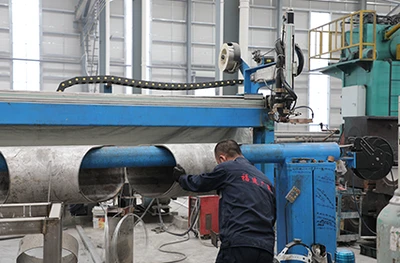 The Complete Guide to Premium Stainless Steel Butt-Welded Fittings from Fujian Guangxin PipeTechJuly 1, 2025Leaking flanges causing downtime? Our precision stainless steel butt-welded fittings form permanent, leak-proof connections built for high-pressure, corrosive, and extreme-temperature applications. Fu...view
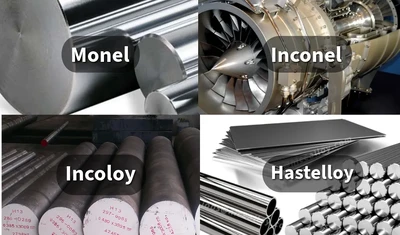 Monel vs Inconel vs Hastelloy Pipes: What's the Difference?January 19, 2026Inconel pipes are selected for high-temperature and high-stress environments, Monel pipes excel in seawater and hydrofluoric acid service, and Hastelloy pipes are preferred for extreme corrosion resis...view
 Hot Extrusion vs Piercing in Nickel Alloy Seamless Pipe ProductionJanuary 19, 2026Hot extrusion is generally preferred for high-alloy, difficult-to-deform nickel alloys, while piercing (Mannesmann process) is widely used for carbon steel and lower-alloy seamless pipes. In nickel al...view
 RTJ Flange vs RF Flange: Professional Comparison for High-Pressure Piping SystemsMarch 12, 2026In industrial piping, flange face type selection directly impacts sealing integrity, pressure handling, safety, maintenance costs, and long-term reliability. Two of the most commonly specified flange ...view
 Why Seamless Nickel Alloy Pipe Is a Preferred Choice for Marine ApplicationsSeptember 15, 2025Seamless nickel alloy pipes have become a key material in marine engineering due to their exceptional corrosion resistance, high mechanical strength, and reliability in extreme environments. These pip...view