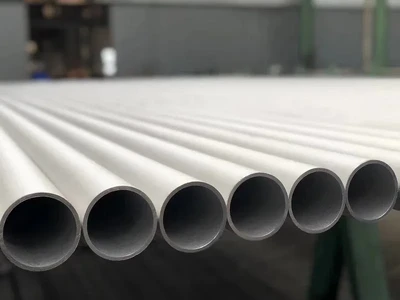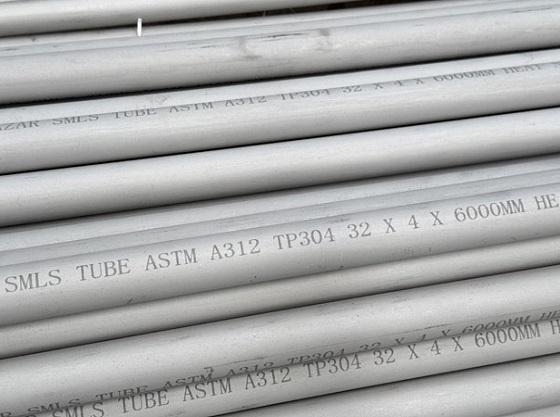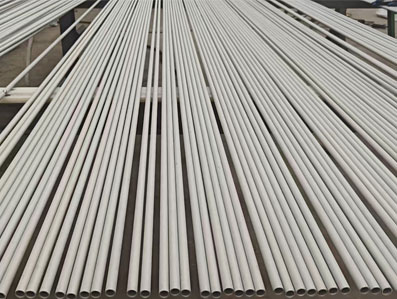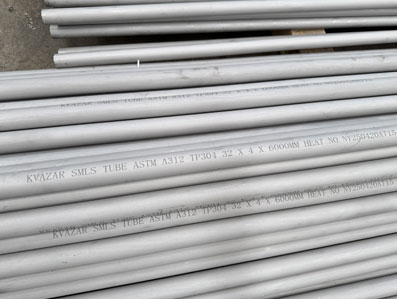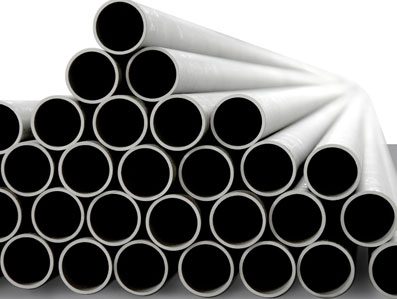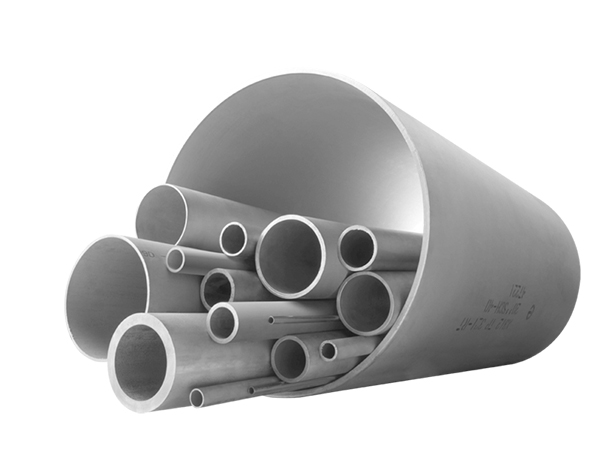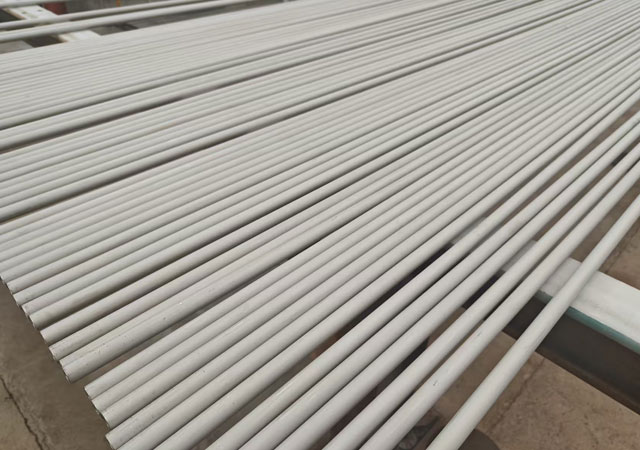
Need precision pipes that won't fail under pressure? Our cold-rolled seamless technology delivers ultra-thin walls with unmatched consistency. Guangxin PipeTech's cold-rolling process transforms stainless steel and nickel alloy billets into high-precision seamless pipes through controlled compression, achieving tolerances within ±0.05mm while enhancing material strength by 20-30% compared to hot-finished pipes.
Let's break down how our multi-stage cold forming creates superior pipes for critical applications.
How Does Cold Rolling Improve Pipe Performance?
Hot-rolled pipes can't match the precision of cold-worked metal. Our process refines both dimensions and microstructure. Cold rolling induces work hardening while reducing wall thickness by up to 75% in stages, creating seamless pipes with smoother surfaces (Ra ≤0.8μm), tighter ovality (≤0.5% OD), and higher yield strength (up to 1,100 MPa) for pressure applications.
Cold Rolling Advantages Over Hot Forming
Property Enhancements:
Material Savings:
Achieves thinner walls (from 6mm down to 0.3mm)
15-20% less raw material waste
Enables lightweight designs without sacrificing strength
Process Stages:
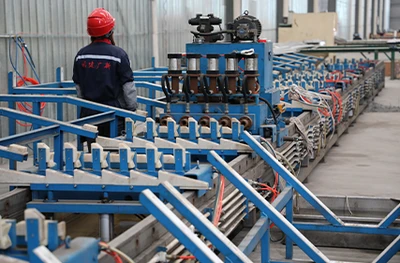
Pilger milling: Reduces diameter in controlled increments
Cold drawing: Further refines dimensions
Annular rolling: For large diameter thin-wall pipes
Sinking: Final size calibration
What Industries Benefit Most From Cold-Rolled Seamless Pipes?
From deep-sea oil wells to pharmaceutical plants, precision matters everywhere. Our cold-rolled pipes serve aerospace hydraulic systems (AMS 5598 compliant), nuclear reactor instrumentation (ASTM A312 TP316L), and chemical processing equipment where ≤0.1mm wall consistency prevents leaks and corrosion initiation points.
Application-Specific Solutions
Oil & Gas:
CRA clad pipes for sour service (H₂S resistant)
Downhole tubing with 0.7mm walls
13Cr-110ksi material for high-pressure wells
Power Generation:
| Requirement | Our Solution |
| Thermal cycling | SA213-T91 tempered martensite |
| Erosion resistance | Internal electropolishing |
| Creep resistance | Controlled cold work + aging |
Semiconductor:
Ultra-clean 316LV ELG (ElectroLess Ground)
Special passivation for high-purity gas lines
Vacuum-tight welds (helium leak tested)
How Do We Ensure Consistent Quality?
Precision isn't accidental—it's engineered through rigorous process controls. Each production batch undergoes 3D laser scanning (measuring 200+ points per meter), eddy current testing for micro-defects, and hydrostatic testing at 1.5x working pressure, with full traceability from billet to final pipe.
Comprehensive Testing Protocol
Dimensional Verification:
Laser micrometers (accuracy ±2μm)
Ultrasonic wall thickness mapping
Roundness testers with 0.01mm resolution
Material Property Tests:
| Test Method | Standard | Frequency |
| Tensile | ASTM E8 | Each heat |
| Hardness | ASTM E10 | 5% of pipes |
| Impact | ASTM E23 | Each batch |
| Corrosion | ASTM G48 | Quarterly |
Specialty Examinations:
PMI (Positive Material Identification) via XRF
Austenite stability testing for cryogenic grades
Ferrite content measurement (0-5% for welds)
What Post-Rolling Treatments Are Available?
Raw pipes meet standards—treated pipes exceed them. Our finishing options include bright annealing (for max corrosion resistance), electropolishing (Ra ≤0.4μm), solution heat treatment (+quenching), and customized passivation chemistries to optimize performance in specific media.
Surface Enhancement Technologies
Annealing Methods:
| Type | Atmosphere | Temperature | Effect |
| Bright | Hydrogen | 1050-1150°C | Oxide-free |
| Dull | Nitrogen | 950-1100°C | Cost-effective |
| Localized | Induction | Spot treatment | For welds |
Pickling & Passivation:
Nitric-HF mixtures for stainless steels
Citric acid for nickel alloys
Electrochemical passivation for uniform oxide layers
Special Coatings:
Xylan® for thread protection
Teflon® lining for chemical resistance
VITCAS® for high-temperature service
Conclusion
Guangxin PipeTech's cold-rolled seamless pipes deliver precision where millimeters matter, backed by advanced processing and rigorous quality assurance.
FJGX
Leading Manufacturer of Stainless Steel Piping Solutions.