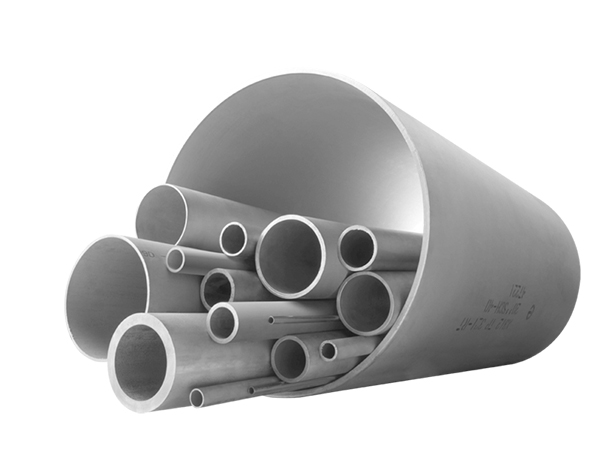
Hot extrusion is generally preferred for high-alloy, difficult-to-deform nickel alloys, while piercing (Mannesmann process) is widely used for carbon steel and lower-alloy seamless pipes. In nickel alloy applications, the choice between these two processes directly affects dimensional accuracy, internal soundness, grain structure, and long-term performance of a seamless nickel alloy pipe.
Understanding how each process works—and where its limitations lie—is essential when specifying pipes for critical service.
What is hot extrusion in seamless nickel alloy pipe production?
Hot extrusion is a process in which a solid billet is heated to a controlled temperature and forced through a die using high pressure, forming a hollow pipe over a mandrel.
In nickel alloy pipe manufacturing, hot extrusion is commonly used because:
Nickel alloys have high deformation resistance
Uniform metal flow is required to avoid cracking
Precise wall thickness control is critical
This process is especially suitable for alloys such as Inconel, Hastelloy, and Monel, where material behavior under heat and pressure must be carefully controlled.
What is piercing (Mannesmann process)?
Piercing involves rotating a heated solid billet between angled rolls, creating a hollow shell due to tensile stresses at the billet center.
This hollow shell is then elongated and rolled into a pipe through subsequent processes such as:
Plug rolling
Mandrel mill rolling
Stretch reduction
Piercing is highly efficient for large-volume production of carbon steel and low-alloy steel pipes, but it presents challenges when applied to nickel alloys.
Why is hot extrusion more suitable for nickel alloy seamless pipes?
Nickel alloys exhibit:
High strength at elevated temperatures
Narrow hot-working temperature windows
Sensitivity to internal defects
Hot extrusion offers better control over these characteristics by:
Maintaining uniform strain distribution
Reducing internal voids and centerline segregation
Producing a refined, consistent grain structure
For critical applications, manufacturers of seamless nickel alloy pipe often rely on hot extrusion to meet stringent quality and inspection requirements.
Can piercing be used for nickel alloy seamless pipes?
Piercing can be used, but with limitations.
In practice:
Only certain nickel alloys with better hot workability are suitable
Defect risk increases due to uneven stress distribution
Internal surface quality is harder to control
As a result, piercing is less common for high-performance nickel alloys and is typically restricted to less demanding service conditions or larger diameter ranges.
How do the two processes compare in terms of pipe quality?
Internal soundness and defect control
Hot extrusion:
Lower risk of internal cracking
Better control of centerline integrity
More consistent ultrasonic test results
Piercing:
Higher sensitivity to internal voids
Greater dependence on billet quality
Increased inspection and rejection rates for nickel alloys
Dimensional accuracy and surface finish
Hot extrusion:
Piercing:
For precision-critical systems, extrusion offers clear advantages.
How does grain structure differ between extrusion and piercing?
Grain structure plays a major role in mechanical and corrosion performance.
Extruded pipes show elongated, uniform grains aligned with the pipe axis
Pierced pipes may show uneven grain flow and localized deformation zones
In corrosive or cyclic-load environments, uniform grain structure improves fatigue resistance and service life.
Which process is better for high-pressure and critical service?
Hot extrusion is generally preferred for:
High-pressure piping
High-temperature service
Corrosive and aggressive media
Oil & gas, chemical, and power applications
Piercing remains suitable for:
Less demanding service
Larger-volume production
Lower-alloy materials
When performance reliability is the priority, extruded seamless nickel alloy pipe provides a higher safety margin.
Does manufacturing method affect standards and inspection?
Yes. Both processes must comply with ASTM and ASME standards, but extruded pipes typically achieve compliance with fewer corrective steps.
Extruded nickel alloy pipes more easily meet:
This simplifies inspection approval and reduces project risk.
How should buyers specify the manufacturing process?
For critical nickel alloy piping, specifications should clearly state:
Seamless pipe manufacturing method (hot extrusion preferred)
Applicable material and pressure standards
Inspection and testing requirements
Service conditions and design limits
Clear process specification ensures the supplied pipe matches the intended application, not just nominal dimensions.
Manufacturing process selection impacts long-term performance
Hot extrusion and piercing are both established seamless pipe production methods, but they are not interchangeable for nickel alloy applications.
Hot extrusion offers superior control, consistency, and reliability for demanding service
Piercing is efficient but less suitable for high-alloy, high-performance requirements
For critical systems, selecting a seamless nickel alloy pipe produced by the appropriate process is a key factor in ensuring safety, durability, and lifecycle performance.
Hot Extrusion vs Piercing – Technical Comparison for Seamless Nickel Alloy Pipe
| Aspect | Hot Extrusion | Piercing (Mannesmann Process) |
Basic Process | Heated solid billet is forced through a die over a mandrel | Heated billet is rotated and pierced by angled rolls |
Suitability for Nickel Alloys | Highly suitable | Limited suitability |
Deformation Control | Excellent, uniform metal flow | Less uniform stress distribution |
Internal Soundness | Very good, low risk of centerline defects | Higher risk of internal voids and cracks |
Grain Structure | Uniform, well-controlled grain flow | Uneven grain flow possible |
Wall Thickness Accuracy | High precision, tight tolerances | Greater wall thickness variation |
Internal Surface Quality | Better, smoother after sizing | Rougher, requires more downstream processing |
Alloy Workability Requirement | Handles high-strength, difficult-to-deform alloys | Best for low- to medium-alloy steels |
Typical Pipe Sizes | Small to medium diameters; thick walls | Medium to large diameters |
Inspection Pass Rate | Higher UT acceptance for nickel alloys | Lower UT acceptance for nickel alloys |
Production Efficiency | Lower output, higher control | High output for mass production |
Manufacturing Cost | Higher per unit | Lower per unit |
Typical Applications | High-pressure, high-temperature, corrosive service | General-purpose seamless steel pipes |
Preferred Use Case | Critical-service seamless nickel alloy pipe | Non-critical or lower-alloy applications |
FJGX
Leading Manufacturer of Stainless Steel Piping Solutions.