Flat face flanges are typically used in low-pressure or equipment-sensitive applications, while raised face flanges are preferred for higher pressure and temperature services where stronger gasket sealing is required. The difference lies in flange face geometry, gasket compression behavior, and system compatibility, not just appearance. Choosing the wrong type can lead to leakage, flange damage, or long-term maintenance issues.
Understanding these differences is essential when sourcing different types of flanges from a flat face flange factory or specifying components for industrial piping systems.
What is a flat face flange?
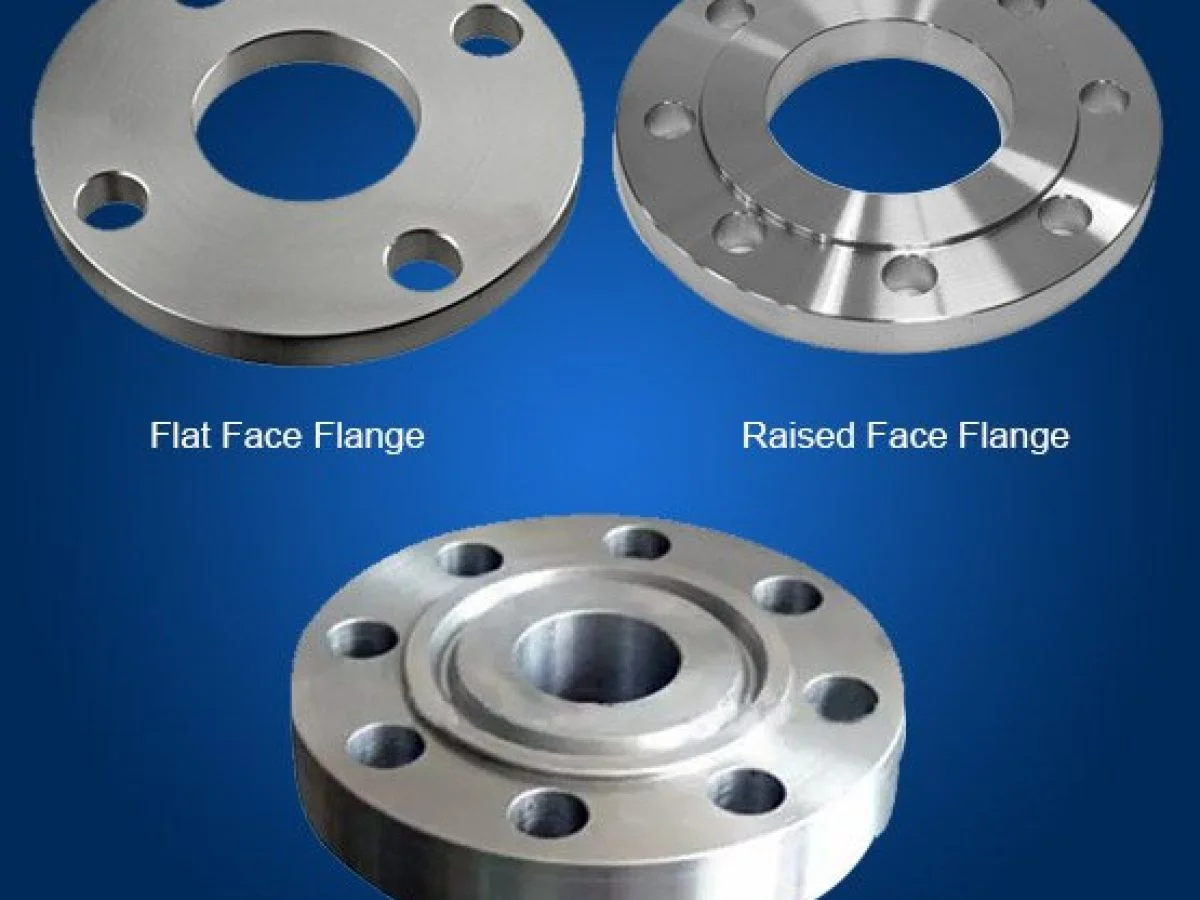
A flat face flange has a fully flat sealing surface that extends across the entire flange face, matching the surface of the mating flange.
Flat face flanges are commonly used when:
Connecting to cast iron or ductile iron equipment
Equipment flanges cannot tolerate bending stress
Full-face gaskets are required to distribute load evenly
Because the contact surface is uniform, bolt loads are spread over a larger area, reducing localized stress on the flange and connected equipment.
What is a raised face flange?
A raised face flange features a small raised sealing surface around the bore, designed to concentrate gasket compression in a narrower area.
Raised face flanges are widely used in:
ASME B16.5 piping systems
Medium- and high-pressure applications
Steel-to-steel flange connections
The raised portion allows for higher gasket stress, improving sealing performance under pressure and temperature fluctuations.
Can flat face and raised face flanges be bolted together?
They can be connected, but modification is usually required.
When a flat face flange is mated with a raised face flange:
The raised face must typically be machined flat
A full-face gasket should be used
Uneven stress must be avoided to protect cast or brittle equipment
From a manufacturing perspective, a reliable flat face flange factory will often supply flat face flanges specifically designed to match equipment interfaces, reducing the need for on-site modification.
How do gasket requirements differ between flat face and raised face flanges?
Gasket selection is one of the most critical differences.
Flat face flange
Raised face flange
Uses ring gaskets or spiral wound gaskets
Gasket contacts only the raised sealing area
Higher sealing stress is achieved with lower bolt load
Using the wrong gasket type can compromise sealing performance regardless of flange quality.
Which flange type handles pressure better?
Raised face flanges are generally better suited for higher pressure and temperature service.
The raised sealing surface:
Increases gasket compression
Improves sealing efficiency
Performs better under thermal cycling
Flat face flanges are typically limited to lower pressure ratings, often up to 300#, depending on material and standard. This is why flat face flanges are commonly found in water systems, utilities, and equipment connections rather than high-pressure pipelines.
Why are flat face flanges commonly used with cast iron equipment?
Cast iron and similar materials are more brittle and sensitive to bending stress.
A flat face flange:
Eliminates bending moments caused by raised sealing surfaces
Reduces the risk of cracking equipment flanges
Provides uniform gasket compression
For this reason, many equipment manufacturers explicitly require flat face flanges, and sourcing them from an experienced flat face flange factory ensures dimensional accuracy and surface flatness.
How do standards influence flat face vs raised face selection?
Standards play a significant role in stainless steel flange types selection.
ASME B16.5 defaults to raised face flanges for most pressure classes
Flat face flanges are specified for special cases, especially when connecting to equipment
DIN standards more commonly include flat face configurations in certain pressure ranges
Understanding the applicable standard helps ensure compatibility with mating components and inspection requirements.
Does flange type affect installation and maintenance?
Yes, significantly.
Flat face flanges:
Raised face flanges:
Require precise bolt torque control
Are more sensitive to surface finish
Offer better long-term sealing in demanding service
From a lifecycle perspective, the correct flange face selection reduces maintenance frequency and unplanned downtime.
How should buyers choose between flat face and raised face flanges?
Selection should be based on:
Pressure and temperature conditions
Type of connected equipment
Applicable standards
Gasket design
Long-term maintenance strategy
Working with qualified flat face flange factory or flat face flange suppliers ensures the product is matched to real operating conditions rather than generic assumptions.
Quick Comparison: Flat Face vs Raised Face Flange
| Aspect | Flat Face (FF) | Raised Face (RF) |
Sealing Surface | Fully flat | Raised sealing area around bore |
Gasket Type | Full-face gasket | Spiral wound or ring gasket |
Pressure Capability | Low to moderate | Moderate to high |
Load Distribution | Uniform across flange face | Concentrated on raised area |
Equipment Protection | Excellent for brittle equipment | Not recommended for cast iron |
Typical Standards | DIN / EN, special ASME cases | ASME B16.5 default |
Common Applications | Pumps, valves, cast iron equipment | Steel piping systems |
Installation Sensitivity | More forgiving | Requires precise torque control |
Manufacturing Focus | Flatness accuracy | Surface finish & raised height |
Typical Supplier | Flat face flange factory | General flange manufacturer |
Choosing the right flange improves system reliability
Flat face flanges and raised face flanges are designed for different mechanical and sealing requirements.
For industrial piping systems, correct selection—supported by proper manufacturing and standards compliance—ensures safe operation, reduced leakage risk, and long service life.
FAQs
Q1: When should you use a flat face flange?
Flat face flanges are ideal for:
Low-pressure systems
Cast iron or brittle materials
Water, HVAC, and fire protection pipelines
They reduce bending stress and prevent cracking by evenly distributing bolt force across a full-face gasket.
Q2: When should you use a raised face flange?
Raised face flanges are best suited for:
High-pressure and high-temperature systems
Oil & gas, petrochemical, and process industries
Applications requiring tight sealing performance
Their smaller sealing area increases gasket pressure, improving leak resistance.
Q3: What gasket is used for flat face vs raised face flanges?
Flat Face (FF):
Full-face gasket (rubber, PTFE, fiber)
Covers entire flange surface
Raised Face (RF):
Ring gasket (spiral wound, graphite, metal)
Fits inside the raised area
Choosing the wrong gasket can result in leakage or flange damage.
Q4: What standards define flat face and raised face flanges?
The most common standards include:
ASME B16.5 (RF is default for steel flanges)
ASME B31.1 / B31.3 (installation guidance)
AWWA / DIN / EN (often FF for water systems)
Always verify different types of flanges when specifying or ordering.
FJGX
Leading Manufacturer of Stainless Steel Piping Solutions.