In industrial piping systems, the selection of materials and processes directly determines the performance,cost and life of the system.
Stainless steel pipe, which are commonly chosen for their corrosion resistance and high pressure resistance, are mainly divided into welded pipes and seamless pipes. Understand their core differences is important for engineers, purchasers and project decision-makers,it can prevent leakage risk, cost overruns or performance non-compliance caused by incorrect selection.
Stainless Steel Welded Pipe vs Stainless Steel Seamless Pipe: Definition
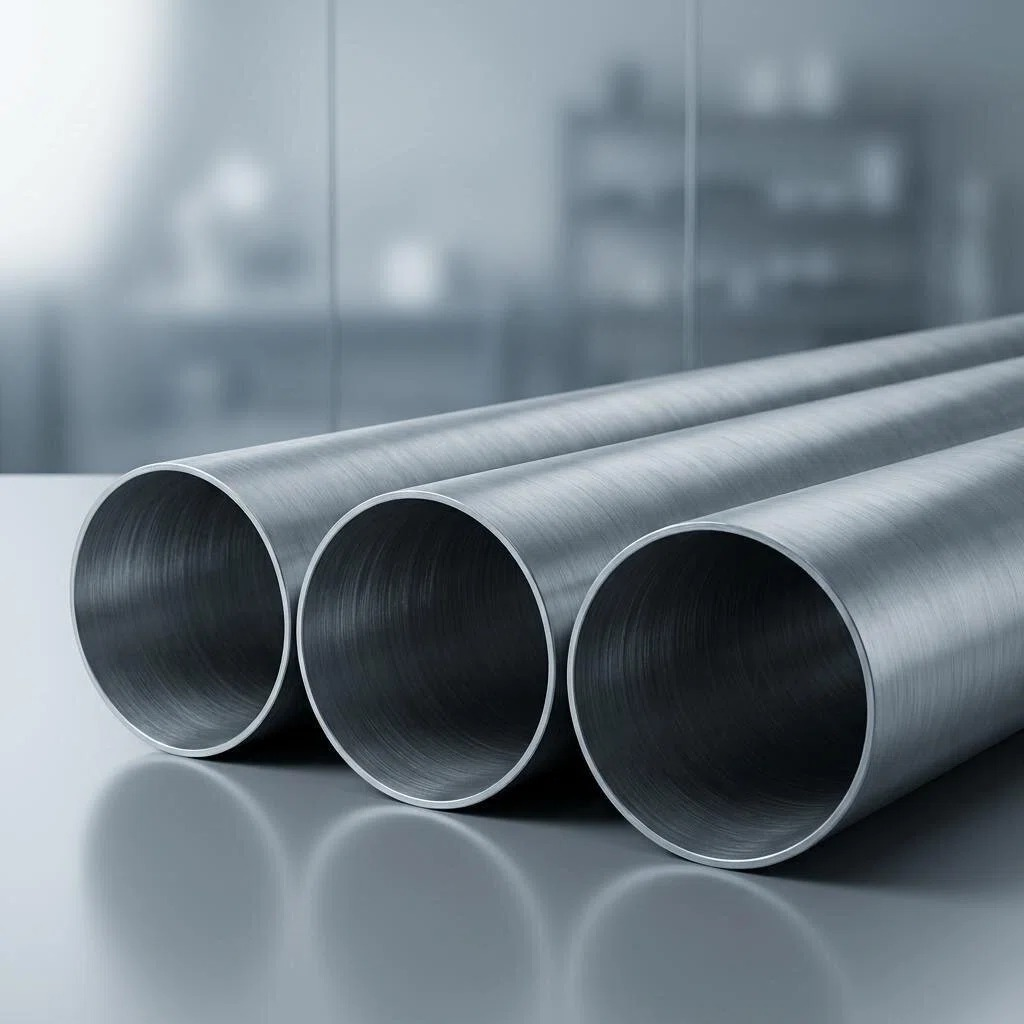
Stainless steel Welded Pipe
Stainless steel welded pipe is made by piercing and rolling single round steel billets without any weld seams. It performs well in high pressure high temperature corrosion resistance and high safety requirements,and is the first choice in chemical, energy, aerospace and other fields.
Main advantages:
①High structural:
no welded ,avoiding possible weakness and corrosion risk in the welded area.
②Strong pressure bearing capacity:
Suitable for systems with higher pressure ratings.
③Uniform material:
Good consistency of inner and outer walls,more balanced corrosion resistance.
④Safe and reliable:
Dangerous medium,flammable and explosive fluid transport safety barrier.
Stainless Steel Seamless Pipe
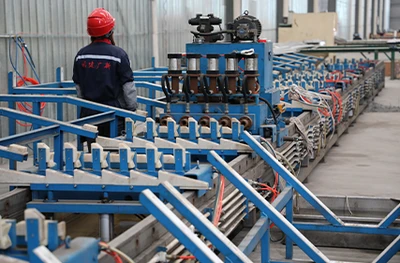
Stainless steel seamless pipe is made by curving steel plates or steel strips and then welded.The manufacturing process includes automatic argon arc welding,plasma welding,laser welding,etc.
With the advancement of technology, the high-quality welded pipes has become very close seamless pipes.
Main advantages:
①Economical:
The production cost is usually lower than of similar seamless pipes.
②Flexible in size:
It can produce large-diameter,thin-walled or special-sized pipe materials.
③Short delivery time:
Suitable for situations where cycles are tight.
④Mature process:
Automated welding ensures stable and reliable weld quality.
Details Comparison Between Seamless Pipes and Welded Pipes
| Characteristics | Stainless steel seamless pipe | Stainless steel welded pipe |
| Production process | Piercing, rolling, without welds | Rolling the sheet, welding |
| Initial cost | Higher | Lower |
| Pressure-bearing capacity | Extremely high, suitable for high-pressure systems | Medium and high pressure, after treatment, can reach high-pressure standards. |
| Corrosion resistance | Uniform overall, no differences in weld seams | There may be weak points in the weld area |
| Size range | Due to the limitation of the raw material, the advantages of thick walls are quite obvious. | The selection of diameter and wall thickness is more flexible, especially in the field of large-diameter thin-walled components. |
| Delivery cycle | Longer | Shorter, with more flexible inventory and customization options (custom stainless steel seamless pipe) |
| Key considerations | Safety, reliability, harsh operating conditions | Cost, delivery time, versatility and specific process performance |
How to Choose: Welded Pipe or Seamless Pipe?
Choose seamless pipes when:
The working pressure is ≥Class 600# or the temperature remains above 400 ℃ continuously.
-The medium is highly toxic,flammable and explosive or high hazard.
-Regulations or design specification mandate it.
-The pipeline system needs to withstand high-frequency,high-amplitude vibrations or thermal cycling.
-The budget allows,and long-term safety and maintenance cost are prioritized.
Choose welded pipes when:
-The work pressure is 300# and below for the medium and low pressure conditions.
-Medium corrosive and not extremely hazardous
-The project is cost-sensitive and need to control procurement expend.
-Special dimensions
-The delivery times is urgent,or frequent customization and modification are required
-It is used in structural support,decoration and low pressure transportation.
Quality and Standard: The Foundation and Selection
Whether choosing welded pipes or stainless steel seamless pipes, meeting international standards is the bottom line to ensure performance and safety.
For seamless pipes, should refer to standards such as ASTM A312, ASTM A269 and ASTM A213, and pay attention to heat treatment status.
For welded pipes, should refer to standards such as ASTM A312, ASTM A358, ASTM A554, and focus on weld procedure qualification reports.
Contact us to get more information about quality.
FAQs
Common questions about Stainless steel seamless pipe and Stainless steel welded pipes
1. Can welded pipes completely replace seamless pipes?
In most applications,welded pipes with strict quality control can replace seamless pipes the same specification.
2. How much does the delivery cycle usually differ?
Normally:
Welded pipes:Standard size 2-4 week,special size 4-8 week.
Seamless pipes:Standard size 4-8 week,special size 8-16 week.
3. How to quickly identify on-site?
-Observe the end face:The welded pipe has a longitudinal weld mark.
-Measure the accuracy:The outer diameter and wall thickness tolerance of the welded pipes are always smaller.
-Check the marks:Regular products have clear markings for material,standards,and production batch number.
-Request the certificate:require the original copy of the factory quality certificate.
4. How to choose a reliable stainless steel seamless pipes manufacturer?
- Comprehensive certification: ISO,PED,ASME,special equipment manufacturing license,etc.
- Technical services: can provide selection support and technical solution.
- Supply records:good performance in important project.
Professional advice:
-Don't choose based on price alone:low price may mean that skipping necessary testing or processing
-On-site inspection:for important projects,assess the supplier’s production and testing on-site.
-Establish long-term relationship: Establish cooperation with a few high quality suppliers to ensure stable quality and safety of supply.
FJGX
Leading Manufacturer of Stainless Steel Piping Solutions.