In industrial piping, flange face type selection directly impacts sealing integrity, pressure handling, safety, maintenance costs, and long-term reliability. Two of the most commonly specified flange face types are Raised Face (RF) and Ring Type Joint (RTJ) flanges. Understanding the differences between them — including sealing mechanisms, pressure/temperature capabilities, cost implications, and application environments — is essential for engineers and procurement professionals.
RF Flange and RTJ Flange: Definitions
Raised Face (RF) Flange:
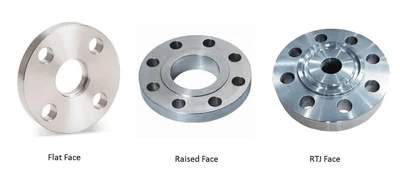
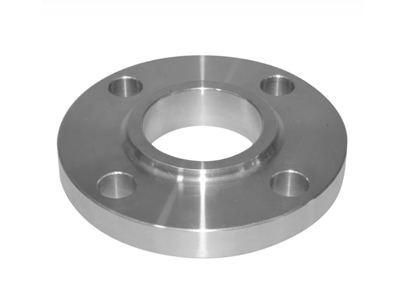
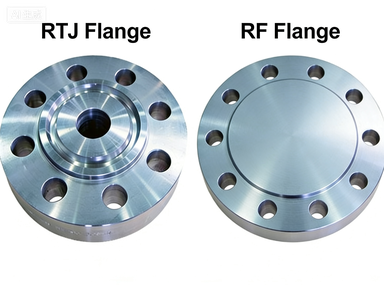
An RF flange features a flat raised sealing area around the bore where a soft or semi-metallic gasket is compressed between two flange faces to create a seal. This design is widely used in general-purpose piping systems where moderate pressures and temperatures are encountered.
Ring Type Joint (RTJ) Flange:
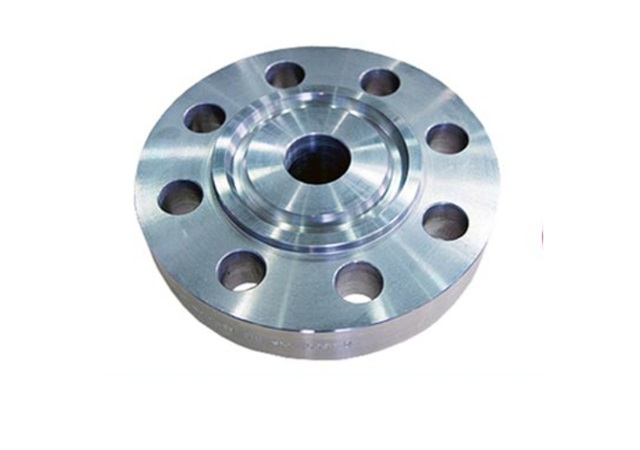
An RTJ flange is designed with a precision-machined groove on the flange face that accepts a metallic ring gasket (oval, octagonal, BX, RX), which deforms under bolt load to create a high-integrity metal-to-metal seal suitable for extreme pressure, high temperature, and cyclic service.
Sealing Mechanisms: Metal vs Soft Gasket
| Feature | RF Flange | RTJ Flange |
|---|
| Contact Surface | Raised face | Machined groove |
| Gasket Type | Soft or semi-metallic (spiral wound, PTFE, graphite) | Hardened or ductile metallic ring |
| Seal Formation | Gasket compression between flat faces | Metal ring deforms into groove (metal-to-metal) |
| Leak Resistance | Good in moderate conditions | Excellent in severe service |
| Suitability | General process piping | High pressure, cyclic loads, critical systems |
Key distinction: RF flanges rely on the gasket’s ability to compress and fill surface irregularities, whereas RTJ flanges use the deformation of a metal ring into a groove for sealing.
Pressure and Temperature Capabilities
| Parameter | RF Flanges | RTJ Flanges |
|---|
| Common Pressure Classes | Class 150, 300, 600 (occasionally higher) | Class 600, 900, 1500, 2500 and beyond |
| Typical Pressure Handling | Moderate up to ~2500 PSI | Very high up to >20,000 PSI (with API 6BX) |
| Temperature Range | Up to ~750°F with carbon steel gaskets | >1000°F depending on ring/gasket materials |
| Pressure Loss under Heat Cycling | Increases due to gasket relaxation | Minimal due to metal-to-metal seal |
RTJ flanges are engineered to sustain extreme service conditions, including high pressures and high temperatures that would degrade soft gasket materials in RF designs.
Installation and Maintenance Differences
RF Flanges:
Easier to align and install.
Gasket replacement is straightforward and inexpensive.
Common gasket materials and tools make maintenance simple.
RTJ Flanges:
Require careful groove preparation, new metallic ring gaskets for each assembly, and precise bolt torque sequencing.
Groove cleanliness and surface condition are critical for leak-free performance.
Metallic rings are single-use (they deform plastically) and require replacement after disassembly.
Application Suitability
Where RF Flanges Excel
Chemical processing
Water treatment and distribution
HVAC and moderate pressure systems
General refinery piping where pressures are moderate
Where RTJ Flanges Are Preferred
Upstream and downstream oil & gas systems
High-pressure steam lines
Subsea pipelines and risers
Petrochemical plants where leak prevention and safety compliance are critical
RTJ is effectively the standard for critical service in oil & gas and high-pressure environments due to their superior sealing performance.
Standards Governing RF and RTJ Flanges
Industry compliance ensures safe, interchangeable, and performance-verified components:
| Standard | Scope |
|---|
| ASME B16.5 & B16.47 | Dimensions and pressure-temperature ratings for RF and RTJ flanges up to large bore sizes |
| ASME B16.20 | Metallic ring gasket dimensions and specifications |
| API 6A | Wellhead and Christmas tree equipment (RTJ groove/gasket requirements) |
Adhering to these standards ensures flange manufacturers produce components that meet pressure class, material, and sealing requirements for their intended service environments.
Common Engineering Questions
Can RF and RTJ flanges be connected together?
No. RF and RTJ flanges must not be mated directly because the RTJ groove prevents effective sealing with a raised face gasket alone. Mispaired connections can result in leaks, safety hazards, and non-compliance with codes.
Which flange type is better for high-pressure applications?
RTJ flanges provide superior sealing performance in high-pressure and high-temperature systems due to their precision metal-to-metal seal. They are typically specified for Class 600 and above, especially in oil & gas and critical process piping.
What gasket types do RF and RTJ flanges use?
RF: Spiral wound, PTFE, CNAF, graphite gaskets depending on service.
RTJ: Precision metal ring gaskets (oval, octagonal, BX, RX) that match groove geometry.
FAQs
What is the key difference between RTJ and RF flanges?
RTJ flanges use a machined groove with a metal ring gasket for metal-to-metal sealing, making them suitable for extreme conditions. RF flanges use a raised face and soft gasket for general industrial applications.
When should I choose an RTJ flange?
Choose RTJ flanges for high pressure, cyclic loading, high temperatures, and environments where leak risk must be minimized — such as oil & gas, offshore, and petrochemical systems.
Are RTJ ring gaskets reusable?
No — metallic RTJ ring gaskets deform plastically on initial use and require replacement if the joint is opened.
FJGX
Leading Manufacturer of Stainless Steel Piping Solutions.