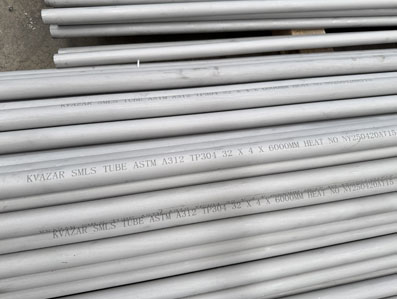
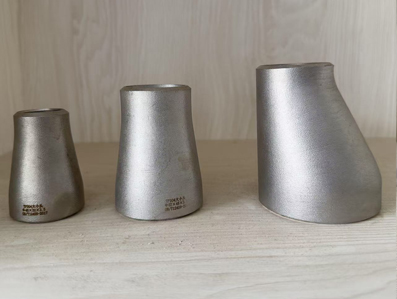
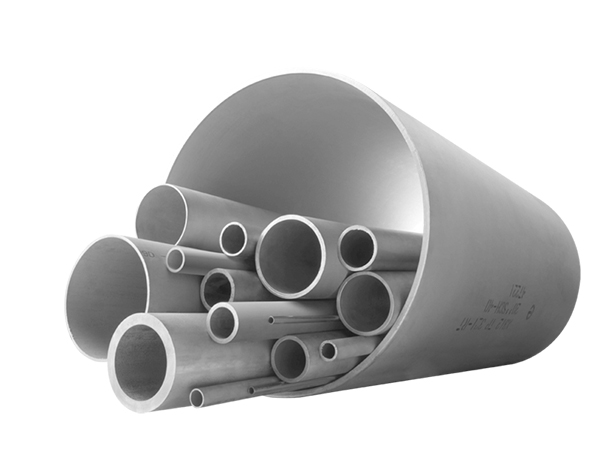
In many industrial applications.The choice of stainless steel pipe is very important.The 304, 316 and duplex 2205 stainless steel have their own advantages and are suitable for different situations.
304, 316 and Duplex 2205: Definitions
304 Stainless steel:
304 stainless steel pipe is one of the most common types of stainless steel pipes, containing 18% chromium and 8% nickel, and it has excellent corrosion resistance and processing performance.
Engineering indicator safety range:
| pressure(MPa) | corrosive environment | Temperature |
| ≤ 2.5 | Cl⁻ < 50 ppm | -196℃ ~ 400℃ |
|
316 Stainless steel:
316 stainless steel pipe contains 16% chromium, 10% nickel and 2% molybdenum. This composition makes it outstanding in resisting chloride ion corrosion.
Engineering indicator safety range:
| pressure(MPa) | corrosive environment | Temperature |
| ≤ 10.0 | ≤ 10000 ppm | -196℃~ 400℃ |
|
Duplex 2205:
Duplex 2205 tube contains 22% chromium, 5% molybdenum and 3% nickel. Combined with austenite and ferrite, it has excellent mechanical strength and corrosion resistance.
Engineering indicator safety range:
| pressure(MPa) | corrosive environment | Temperature |
| ≤ 30.0 | ≤ 10000 ppm | -50℃~ 250℃ |
|
The main application of stainless steel pipes
The requirements of each environment for the pressure-bearing capacity, corrosion resistance and high-temperature resistance of stainless steel pipes
| pressure(MPa) | corrosive environment | Temperature |
| Food equipment | 0.3 ~ 1.6 | Cl⁻ < 50 ppm | 60 ~ 135℃ |
|
| Home decoration | 0.2 ~ 0.6 | Cl⁻ < 100 ppm | 0 ~ 100℃ |
|
| Sanseawater desalination system | 6.0 ~ 8.5 | Cl⁻ > 10000 ppm | 25 ~ 45℃ |
|
| Medical equipment | 0.5 ~ 2.0 | Cl⁻=5,500 ~6,000 ppm | 20 ~ 121℃ |
|
| Offshore oil platforms | 10 ~ 25+ | Cl⁻ > 10000 ppm | -10 ~ 120℃ |
|
| High-pressure oil and gas pipelines | 10 ~ 30+ | Cl⁻ > 5000 ppm | 50 ~ 150℃ |
How does the pressure affect stainless steel pipe?
Pressure can lead the stress corrosion creaking(SCC)!
The pressure itself does not directly affect the pipe material, but it provides "tensile stress".
In a corrosive environment, if there is residual tensile stress in the pipe material, then the material will suddenly crack at a stress far below the yield strength, that is SCC.
How does the corrosive environment affect stainless steel pipe?
The corrosive environment can damage the passivation film of the material!
The chloride ions in the corrosive environment will undergo a battery reaction with stainless steel, thereby destroying the passive film.
Hydrogen ions in the corrosive environment will lower the pH value and dissolve the passivation film.
How does the Temperature affect stainless steel pipe?
Temperature is the primary factor that accelerates chemical reactions.
Low temperatures will affect toughness.
Medium temperature belongs to the sensitization interval, and intergranular erosion will occur.
High temperature will lead to the decline of material strength and creep
How to choose the appropriate stainless steel material?
Confirm the application of stainless steel pipes is under what pressure, corrosion environment, temperature
Based on the strength, formability and weldability in the application scenario, select the specific model, such as 316L.
Based on the cleanliness requirements and appearance demands, select the corresponding process grade for the surface finish.
Determine the materials based on the corresponding data and your budget if you want to buy stainless steel pipes.
FAQs
Why after welding seam near easy to rust?
This is intergranular corrosion. When 304 stays within the "sensitization range" of 450-900°C, carbides precipitate at the grain boundaries, resulting in a chromium deficiency.
Is food-grade stainless steel the same as 304?
Food-grade 304 is indeed commonly used, but "food-grade" is a comprehensive standard that requires extremely low leaching substances (such as Ni and Cr migration amounts) and specific surface smoothness (easy to clean).
FJGX
Leading Manufacturer of Stainless Steel Piping Solutions.