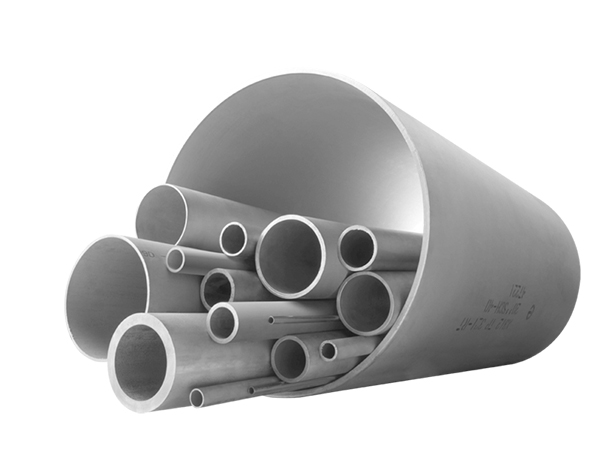
An Inconel 718 seamless tube is a high-strength nickel-based alloy tube designed for applications involving elevated temperatures, high pressure, cyclic loading and corrosive environments. It is widely used in aerospace, oil and gas, energy, chemical processing and other industries where ordinary stainless steel tubing may not provide sufficient mechanical strength or long-term reliability.
When you source Inconel 718 seamless tube, the alloy name and nominal dimensions tell only part of the story. The tube's actual performance is shaped by chemical composition, melting and forming history, heat-treatment condition, grain structure, dimensional control, surface condition, testing and traceability. These production variables determine whether the tube bends, welds, machines and performs consistently in service.
Understanding the Inconel 718 Material
Inconel 718, also known as UNS N07718, is a precipitation-hardened nickel-chromium alloy containing iron, niobium, molybdenum, titanium and aluminum.
It is known for combining:
High tensile and yield strength
Good fatigue and creep resistance
Resistance to oxidation and corrosion
Good weldability compared with many other precipitation-hardened nickel alloys
Mechanical stability at cryogenic and elevated temperatures
Inconel 718 generally maintains useful mechanical strength at temperatures of approximately 650–700°C, depending on the material condition, applied load and expected service life.
Unlike alloys that obtain most of their strength directly from their base composition, Inconel 718 depends heavily on solution treatment and controlled aging. During solution treatment, the temperature and holding time must be sufficient to prepare the microstructure for precipitation hardening without causing excessive grain growth. During aging, the strengthening γ″ and γ′ phases must form within a controlled time-and-temperature window. Furnace uniformity, load arrangement, transfer time and cooling practice can therefore create measurable differences between tubes carrying the same UNS N07718 designation.
You should pay close attention to the delivery condition because it affects both fabrication and final strength. Solution-annealed tube is generally easier to form and machine, while solution-treated and aged tube provides higher strength but is less forgiving during subsequent processing. In practice, the production route should match the sequence of bending, welding, machining and final heat treatment rather than treating heat treatment as a certificate item only.
What Is the Chemical Composition of Inconel 718?
Inconel 718 has a carefully controlled chemical composition that provides its high strength, corrosion resistance and thermal stability.
| Element | Typical Composition |
|---|
| Nickel (Ni) | 50–55% |
| Chromium (Cr) | 17–21% |
| Iron (Fe) | Balance |
| Niobium (Nb) + Tantalum (Ta) | 4.75–5.50% |
| Molybdenum (Mo) | 2.80–3.30% |
| Titanium (Ti) | 0.65–1.15% |
| Aluminum (Al) | 0.20–0.80% |
| Carbon (C) | 0.08% maximum |
| Cobalt (Co) | 1.00% maximum |
| Manganese (Mn) | 0.35% maximum |
| Silicon (Si) | 0.35% maximum |
| Copper (Cu) | 0.30% maximum |
| Phosphorus (P) | 0.015% maximum |
| Sulfur (S) | 0.015% maximum |
Niobium plays an important role in forming the gamma double prime phase, or γ″, which is the primary strengthening phase in Inconel 718. Titanium and aluminum contribute to the formation of gamma prime, or γ′. These strengthening phases develop during the aging process and significantly improve tensile strength, yield strength and resistance to deformation.
When you evaluate Inconel 718, do not judge the material only by whether the nickel content falls within 50–55%. The balance between niobium, molybdenum, titanium and aluminum controls the alloy’s precipitation response, while residual elements influence hot workability, cleanliness and grain-boundary behavior.
In production, composition control starts at melting and continues through remelting, homogenization and billet preparation. If niobium segregates locally, the tube may develop uneven strengthening response or undesirable phases after heat treatment. Excess sulfur or phosphorus can weaken grain boundaries and increase cracking risk during hot working or welding. Consistent chemistry across the heat is therefore more valuable than a single headline value on a generic data sheet.
For aerospace, oil and gas, energy and other critical applications, a heat-specific material test certificate allows you to connect the finished tube to its actual melt chemistry and test results. The practical value of this document is traceability: when a tube is cut, heat treated, tested and repacked, the heat number should remain linked to every finished length. This makes it possible to investigate any later variation in hardness, weld response or service performance.
Strict composition and heat control can also improve production yield. More consistent material requires fewer corrective heat treatments, produces more stable machining behavior and reduces the risk of rejecting finished components after expensive fabrication steps.
What Is Inconel 718 Used For?
Inconel 718 is used in applications that require a combination of high mechanical strength, pressure resistance, fatigue performance and corrosion resistance.
Typical applications include:
Aircraft engine components
Turbine casings and structural parts
Rocket engine and cryogenic system components
Oil and gas downhole tools
Offshore pressure-control equipment
Nuclear and power-generation equipment
High-pressure valves and piping systems
Heat exchangers
Chemical processing equipment
Hydraulic and instrumentation systems
The alloy is especially suitable for components exposed to repeated pressure changes, vibration, thermal cycling and sustained mechanical loading.
However, selecting Inconel 718 only by industry name is not enough. A heat-exchanger tube may prioritize wall uniformity, internal cleanliness and corrosion exposure, while an aerospace hydraulic tube may require tighter ovality, smoother internal surfaces and stronger fatigue control. The same alloy therefore moves through different production and inspection routes depending on how the finished component will be formed and loaded.
In practical production planning, operating temperature, pressure, process medium and downstream fabrication are converted into manufacturing controls. High-pressure service usually leads to tighter minimum-wall control and more extensive nondestructive testing. Tight-radius bending makes ovality, elongation and surface defects more critical. Welding applications place greater emphasis on cleanliness, edge preparation and the sequence of solution treatment and aging. This is how service theory is translated into tube-making operations.
Inconel 718 vs Stainless Steel 316
Inconel 718 and stainless steel 316 are both corrosion-resistant materials, but they are designed for different service conditions.
| Property | Inconel 718 | Stainless Steel 316 |
|---|
| Main alloy type | Nickel-based precipitation-hardened alloy | Iron-based austenitic stainless steel |
| Main advantage | High strength and fatigue resistance | General corrosion resistance and economical fabrication |
| Useful high-strength temperature | Approximately 650–700°C | Strength decreases considerably at elevated temperatures |
| Tensile strength | Approximately 1,275 MPa or higher after aging | Approximately 515 MPa in common annealed condition |
| Pressure and fatigue performance | Suitable for demanding cyclic and high-stress applications | Suitable for general industrial service |
| Fabrication | Requires controlled processing and heat treatment | Generally easier to form and fabricate |
| Relative cost | Higher | Lower |
| Typical applications | Aerospace, oil and gas, energy and critical pressure systems | Food processing, marine, water treatment and general industry |
Inconel 718 generally offers much higher mechanical strength and better resistance to fatigue and deformation than stainless steel 316. However, this does not mean that Inconel 718 is always the better material.
You should not compare these alloys only by their maximum-temperature figures. The more useful comparison is how each material behaves under the actual combination of stress, pressure, fatigue cycles, fabrication method and corrosion exposure. Inconel 718 may retain strength where 316 stainless steel becomes too soft, but it also requires more controlled forming, machining and heat treatment.
For mild, low-pressure environments, stainless steel 316 may provide sufficient performance at a lower cost. For high-pressure or safety-critical systems where failure may cause significant downtime or safety risks, the higher initial cost of Inconel 718 may be justified by its longer service life and greater mechanical reliability.
A sound material decision should help you avoid both under-specification and unnecessary cost. In mild, low-pressure service, 316 stainless steel may be fully adequate. In high-stress or fatigue-critical systems, Inconel 718 may justify its higher material and processing cost because it gives you a wider mechanical-performance margin.
Guangxin PipeTech Inconel 718 Seamless Tube
Guangxin PipeTech, as one of the professional pipes and fittings manufacturers, supplies Inconel 718 seamless tubes for high-temperature, high-pressure and corrosion-resistant industrial applications.
Depending on the project requirements, tubes can be supplied in different dimensions, heat-treatment conditions, surface finishes and inspection levels.
Available customization may include:
Customized outer diameter and wall thickness
Fixed-length or random-length supply
Solution-annealed or aged condition
Pickled, bright-annealed or polished surface
Customized dimensional tolerances
Cutting and end preparation
Mechanical and chemical testing
Hydrostatic or nondestructive examination
Third-party inspection
Material traceability documentation
Customized marking and export packaging
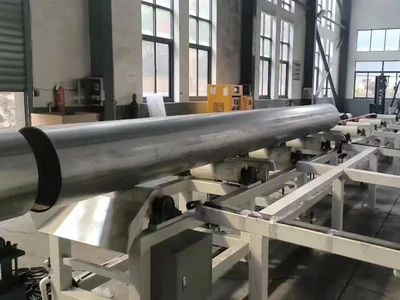
For technically demanding projects, Guangxin PipeTech reviews how the tube will be manufactured and used before production is released. The review focuses on whether the selected mother tube, cold-working schedule, intermediate annealing, final heat treatment, straightening method, surface finishing and inspection route can achieve the required combination of dimensions and properties. This avoids producing a tube that meets the nominal alloy grade but becomes difficult to bend, weld or assemble.
What Are the Mechanical Properties of Inconel 718 Seamless Tube?
Typical room-temperature mechanical properties of properly solution-treated and aged Inconel 718 may include:
| Mechanical Property | Typical Value |
|---|
| Tensile strength | Approximately 1,275 MPa or higher |
| Yield strength | Approximately 1,030 MPa or higher |
| Elongation | Approximately 12–20% |
| Hardness | Approximately 36–45 HRC |
| Useful service temperature | Up to approximately 650–700°C |
These values are representative rather than universal. Actual mechanical properties depend on product form, wall thickness, heat treatment, cold-working level, grain structure and testing conditions. Thin-wall cold-drawn tubing may respond differently from heavy-wall tubing because the amount of deformation, section heating and cooling rate are not the same.
When you compare mechanical data, first confirm the delivery condition behind the numbers. A strength value taken from aged Inconel 718 cannot be used to describe a tube supplied only in the solution-annealed condition. This distinction matters on the shop floor: an annealed tube may form more easily, while an aged tube may meet the final strength requirement but demand more conservative machining and bending parameters.
Common delivery and processing conditions include:
Solution-annealed condition
Solution-annealed and aged condition
Cold-worked condition
Cold-worked and aged condition
Customer-specified heat-treatment condition
The material certificate should identify the heat number, heat-treatment condition and actual test results. In production, hardness checks are often used as a fast consistency indicator after aging, but hardness alone cannot replace tensile testing where specified. For critical tubes, specimen orientation, test frequency and the location of samples within the heat-treatment batch can influence how representative the results are.
This allows you to compare tubes with genuinely equivalent processing histories instead of treating every product marked "Inconel 718" as mechanically identical.
Quality Inspection and Material Documentation
The inspection route should be matched to the defect types that may arise during melting, extrusion, piercing, cold drawing, heat treatment and finishing.
Available inspection methods may include:
Chemical composition analysis
Positive material identification
Tensile testing
Yield-strength testing
Elongation testing
Hardness testing
Flattening or flaring testing
Hydrostatic testing
Eddy-current testing
Ultrasonic testing
Dimensional inspection
Surface examination
Heat-treatment record review
Microstructure or grain-size examination
Third-party inspection
Not every project requires every test. The useful question is what each method can detect. Eddy-current testing is effective for many near-surface discontinuities in tubing; ultrasonic testing is better suited to detecting certain internal or wall-related indications; hydrostatic testing confirms pressure integrity but does not characterize every defect; dimensional inspection verifies geometry but says little about alloy identity. A balanced inspection plan avoids both blind spots and unnecessary testing.
For aerospace, oil and gas, energy and other critical projects, documentation should be treated as part of the finished product because it records how the tube moved through production.
The heat number should remain traceable through raw-material receipt, tube reduction, heat treatment, testing, cutting, marking and packaging. When a long tube is divided into shorter lengths, each piece should retain a durable identification or a controlled link to the original heat and production lot. Traceability can be lost surprisingly easily during polishing, cutting or repacking, so identification control must be built into the workflow rather than added at dispatch.
Complete traceability gives you a reliable basis for incoming inspection, welding records, equipment certification, quality audits and later failure analysis.
Applications of Inconel 718 Seamless Tube
Aerospace Systems
Inconel 718 seamless tubing can be used in high-pressure hydraulic systems, instrumentation lines and engine-related components exposed to vibration, cyclic loading and temperature changes.
In aerospace production, consistency is often more important than a single high test value. Variations in grain structure, cleanliness, heat-treatment response or internal-surface quality can reduce fatigue reliability even when basic chemistry and room-temperature tensile results pass. Tube handling, capped ends and clean cutting practices may also matter because contamination introduced before welding can create defects later.
Oil and Gas Equipment
Inconel 718 tubes may be used in downhole tools, well-control equipment, offshore systems and high-pressure lines.
For oil and gas service, chloride exposure, hydrogen sulfide, pressure and temperature influence both material suitability and the inspection route. High-strength material can become more sensitive to environmental cracking under certain conditions, so hardness, heat-treatment consistency, surface condition and applicable sour-service criteria must be considered together. The alloy name alone does not guarantee suitability for every downhole or offshore environment.
Chemical Processing
Inconel 718 seamless tubes may be used in heat exchangers, reactors, instrumentation systems and process equipment where elevated pressure and mechanical strength are important.
In chemical processing, corrosion performance changes with concentration, temperature, contaminants, flow velocity and shutdown conditions. From a production perspective, smooth internal surfaces, controlled weld zones and effective cleaning can be just as important as bulk alloy chemistry because deposits, crevices and surface contamination can create local attack.
Power Generation
Inconel 718 may be considered for gas-turbine, nuclear and other energy-related systems requiring high mechanical strength and resistance to thermal cycling.
In power-generation applications, inspection intensity should follow the safety classification and failure consequence. Thermal cycling also makes residual stress and wall-thickness transitions important, especially where the tube is welded or machined into a more complex component.
High-Pressure Industrial Systems
The alloy can also be used in hydraulic systems, high-pressure valves, control lines and pressure-bearing components subjected to repeated loading.
For high-pressure systems, wall-thickness uniformity, surface quality and nondestructive examination may be as important as tensile strength. A high-strength tube with a local thin area or drawing defect can still become the weakest point in the pressure circuit.
How to Select an Inconel 718 Seamless Tube Supplier
When you select an Inconel 718 supplier, evaluate the supplier's process-control capability rather than comparing unit prices alone.
You should check whether the supplier can demonstrate:
The correct material grade and applicable standard
Heat-specific chemical composition reports
Controlled heat-treatment records
Consistent mechanical properties
Suitable dimensional-control capability
Nondestructive-testing options
Complete material traceability
Experience with nickel-alloy tubing
Customized processing and cutting
Technical support before production
Proper marking, packaging and export documentation
FAQ About Inconel 718 Seamless Tube
Can Inconel 718 Be Welded?
Yes. Inconel 718 has relatively good weldability compared with many other precipitation-hardened nickel alloys. TIG, MIG and other qualified welding processes may be used.
However, welding performance depends on the material condition, joint design, filler metal, cleanliness, heat input and post-weld heat-treatment plan. If you weld fully aged tube, the heat-affected zone may not retain the same local microstructure and properties as the base material. In many fabrication routes, forming and welding are completed in the solution-treated condition before final aging, but the correct sequence must follow the component design and qualified procedure.
What Temperature Can Inconel 718 Withstand?
Inconel 718 is commonly used in high-strength applications at temperatures up to approximately 650–700°C.
The final design temperature should be determined according to allowable stress, pressure, load duration, fatigue requirements and the applicable engineering code.
Is Inconel 718 Resistant to Corrosion?
Yes. Inconel 718 provides good resistance to oxidation and many corrosive environments.
However, no nickel alloy is resistant to every chemical medium. Corrosion behavior depends on temperature, concentration, contaminants, flow velocity, deposits and exposure time. You should assess the complete environment, including startup and shutdown conditions, because local concentration or stagnant zones can be more aggressive than the normal operating condition.
Inconel 718 vs Stainless Steel 316: What Is the Difference?
Inconel 718 provides much higher strength, fatigue resistance and elevated-temperature performance than TP316 stainless steel. Stainless steel 316 is more economical and suitable for general corrosion-resistant applications, while Inconel 718 is preferred for critical high-pressure and high-stress systems.
Inconel vs Stainless Steel: Which Is Better?
Inconel is generally better for extreme heat, pressure and aggressive environments, while stainless steel is more affordable and easier to process. The correct choice depends on operating temperature, pressure, corrosion medium and required service life.
What Is the Difference Between Inconel 601 and Inconel 718 Seamless Tube?
Inconel 601 and Inconel 718 are both nickel-based alloys, but they are designed for different operating requirements.
Inconel 601 seamless tube is primarily selected for high-temperature oxidation resistance. It is commonly used in industrial furnaces, heat-treatment equipment and high-temperature processing systems.
Inconel 718 seamless tube is primarily selected for high mechanical strength, fatigue resistance and pressure performance at temperatures up to approximately 650–700°C. It is more suitable for aerospace, oil and gas, energy and high-pressure mechanical systems.
You should choose Inconel 601 when very-high-temperature oxidation resistance is the primary requirement. Inconel 718 is generally the stronger option when pressure, fatigue resistance and mechanical load are more important. The production routes also differ: Alloy 718 relies on precipitation hardening, while Alloy 601 is selected mainly for its oxidation-resistant chemistry and high-temperature stability.
Conclusion
An Inconel 718 seamless tube is a high-performance nickel-alloy tubing solution for applications involving elevated temperatures, high pressure, fatigue loading and demanding operating environments.
However, product reliability depends on more than the alloy designation. Chemical composition accuracy, heat treatment, mechanical properties, dimensional tolerances, nondestructive inspection and material traceability all affect the tube's final performance.
When you purchase Inconel 718 tubing, avoid focusing only on nickel content, nominal size or price per kilogram. Check how chemistry, cold reduction, intermediate annealing, final heat treatment, straightening, surface finishing and inspection work together. The most reliable tube is the one whose production route matches your forming process and final service conditions.
Guangxin PipeTech supplies customized Inconel 718 seamless tubes with project-specific dimensions, heat-treatment conditions, surface finishes, testing options and documentation. You can work with our technical team to align the tube-making route, final properties and inspection plan with your intended fabrication and service requirements.
FJGX
Leading Manufacturer of Stainless Steel Piping Solutions.